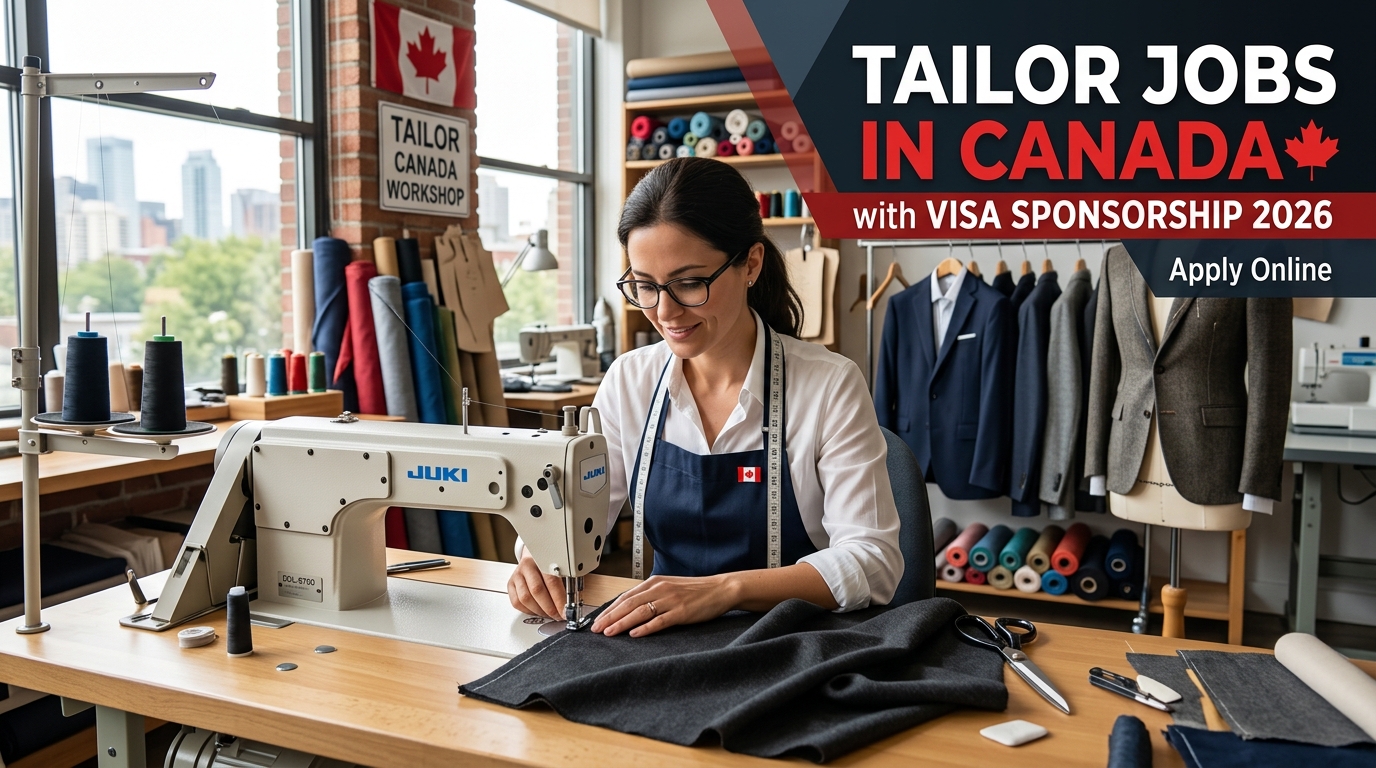
Canada continues to provide excellent career opportunities for skilled workers, and Tailor Jobs in Canada with Visa Sponsorship 2026 are becoming increasingly attractive for international applicants. The country’s growing fashion, textile, and garment industries require experienced tailors and dressmakers to support clothing manufacturers, alteration shops, boutiques, and custom design businesses.
Many Canadian employers facing labor shortages are willing to hire qualified foreign workers and may assist eligible candidates through LMIA-approved positions and work permit sponsorship programs. For skilled tailors, these jobs can also provide a pathway toward permanent residency in Canada.
Table of Contents
- Job Details
- Why Tailor Jobs Are in Demand in Canada
- Types of Tailor Jobs Available
- Salary for Tailors in Canada
- Benefits of Tailor Jobs with Visa Sponsorship
- Requirements for Tailor Jobs in Canada
- Main Responsibilities
- Skills Employers Value
- Work Environment
- Immigration Opportunities
- How to Apply for Tailor Jobs in Canada with Visa Sponsorship 2026
Job Details
| Job Title | Tailor / Dressmaker |
|---|---|
| Country | Canada |
| Job Type | Full-Time |
| Experience Required | Minimum 1–2 Years Preferred |
| Education | High School Diploma Preferred |
| Visa Sponsorship | Available with Selected Employers |
| LMIA Opportunities | Yes |
| Salary | CAD $18 – CAD $30 Per Hour |
| Work Permit | Employer-Assisted |
| Accommodation | May Be Provided |
Also Check: Sewing Machine Operator Jobs in Canada with Visa Sponsorship 2026.
Why Tailor Jobs Are in Demand in Canada
Canada’s apparel and textile industries continue to expand, creating strong demand for experienced tailoring professionals. Clothing retailers, alteration shops, and fashion companies often struggle to fill skilled positions locally, leading some employers to recruit international workers.
Factors Driving Demand
- Growth of fashion and apparel industries.
- Increasing demand for custom clothing.
- Expansion of alteration and repair services.
- Labor shortages in skilled trades.
- Rising demand for wedding and formal wear.
- Need for experienced dressmakers and sewing specialists.
Types of Tailor Jobs Available
International applicants can find various tailoring positions across Canada.
1. Custom Tailor
Design and create custom-made garments according to customer specifications.
2. Alteration Tailor
Adjust and repair existing clothing to ensure proper fit and comfort.
3. Dressmaker
Produce dresses, gowns, and formal wear for individual customers.
4. Fashion Tailor
Work with designers and clothing brands to manufacture garments.
5. Bespoke Tailor
Create premium handmade suits and customized apparel.
6. Costume Tailor
Design and produce costumes for theaters, films, and entertainment industries.
7. Industrial Sewing Machine Operator
Operate specialized sewing machines for large-scale garment production.
Salary for Tailors in Canada
Salaries vary according to experience, province, and employer.
| Experience Level | Hourly Wage |
|---|---|
| Entry-Level Tailor | CAD $18 – $22 |
| Experienced Tailor | CAD $22 – $27 |
| Senior Tailor | CAD $27 – $30+ |
Monthly Income
Workers can earn between CAD $3,000 and CAD $5,500 per month, depending on overtime and experience.
Additional benefits may include:
- Overtime pay
- Paid vacation
- Health insurance
- Pension contributions
- Relocation assistance
- Performance bonuses
Benefits of Tailor Jobs with Visa Sponsorship
Visa Sponsorship Opportunities
Some employers assist foreign workers with work permits and immigration procedures.
Competitive Salaries
Canada offers attractive wages and strong labor protections.
Permanent Residency Pathways
Tailors may qualify under various immigration programs, including skilled trade streams.
Stable Employment
Tailoring skills remain valuable across several industries.
Career Advancement
Experienced workers can progress to supervisory roles or start their own tailoring businesses.
International Work Experience
Working in Canada provides valuable global exposure and enhances future career prospects.
Requirements for Tailor Jobs in Canada
Most employers prefer candidates who possess:
- Valid passport.
- High school diploma or equivalent.
- Minimum one to two years of tailoring experience.
- Ability to use industrial sewing machines.
- Basic English communication skills.
- Knowledge of garment construction techniques.
- Attention to detail.
- Ability to meet deadlines.
Additional qualifications that improve employment opportunities include:
- Fashion design certification.
- Pattern-making experience.
- Textile knowledge.
- Advanced sewing skills.
- Previous experience in garment manufacturing.
Main Responsibilities
Tailors in Canada are commonly responsible for:
- Measuring customers accurately.
- Cutting fabrics according to patterns.
- Sewing and assembling garments.
- Performing clothing alterations and repairs.
- Creating custom-made apparel.
- Inspecting finished products for quality.
- Using industrial sewing equipment.
- Maintaining workplace cleanliness.
- Meeting production deadlines.
- Advising customers on fabrics and styles.
Skills Employers Value
Canadian employers highly value workers who possess:
- Precision and attention to detail.
- Creativity.
- Manual dexterity.
- Communication skills.
- Customer service abilities.
- Time management.
- Problem-solving skills.
- Teamwork and reliability.
Work Environment
Tailors may work in:
- Clothing factories.
- Fashion houses.
- Alteration shops.
- Retail stores.
- Wedding boutiques.
- Textile manufacturing companies.
- Self-employed tailoring businesses.
Working hours generally include:
- Day shifts.
- Evening shifts.
- Weekend work during busy seasons.
- Full-time and permanent schedules.
Immigration Opportunities
Skilled tailors may become eligible for several Canadian immigration programs, including:
- Express Entry Program.
- Provincial Nominee Programs (PNPs).
- Federal Skilled Trades Program.
- Employer-Sponsored Work Permits.
- LMIA-Based Employment Opportunities.
These pathways may eventually lead to permanent residency in Canada.
How to Apply for Tailor Jobs in Canada with Visa Sponsorship 2026
Step 1: Prepare Your CV
Highlight your tailoring experience, sewing skills, certifications, and achievements.
Step 2: Gather Required Documents
Prepare:
- Passport
- Educational certificates
- Work experience letters
- Language test results (if required)
- Reference letters
Step 3: Search for Sponsored Vacancies
Look for employers offering:
- LMIA-approved jobs
- Visa sponsorship
- International recruitment programs
Step 4: Submit Applications
Apply through company websites, recruitment agencies, and Canadian job portals.
Step 5: Attend Interviews
Employers may conduct video or telephone interviews for overseas candidates.
Step 6: Receive a Job Offer
Successful applicants may receive an employment contract and guidance regarding work permit procedures.
Conclusion
Tailor Jobs in Canada with Visa Sponsorship 2026 provide excellent opportunities for skilled workers seeking stable employment and long-term career growth. With competitive salaries, strong labor protections, and pathways to permanent residency, Canada remains one of the best destinations for experienced tailors and dressmakers. Applicants with sewing expertise, garment construction knowledge, and attention to detail can find rewarding opportunities across the country.