Farm Worker Jobs in Canada with LMIA: Your 2026 Guide
Yes, you can get a farm worker job in Canada with an LMIA in 2026 and move there legally on a work permit. Canadian farms hire thousands of foreign workers every year through two official routes: the Seasonal Agricultural Worker Program (SAWP) and the Agricultural Stream of the Temporary Foreign Worker Program. This guide explains both routes, the duties and pay you can expect, the housing your employer must provide, and how to apply from abroad step by step.
Farming is one of the most reliable paths for foreign workers to enter Canada with employer sponsorship. Unlike many other jobs, farm employers in provinces like Ontario, British Columbia, and Quebec regularly apply for LMIAs, which means the employer has government permission to hire you from outside Canada. If you are looking for honest physical work with legal immigration backing, this is one of the strongest options available right now.
Job Overview: Farm Worker in Canada (Leamington, Ontario)
This post focuses on general farm worker roles in Leamington, Ontario, a region known for its large greenhouse and vegetable growing industry. Positions like this typically involve planting, harvesting, packing, and sorting crops such as tomatoes, peppers, cucumbers, and berries. Leamington employers regularly hire foreign workers because local labour supply cannot cover the peak growing and harvest seasons.
Most of these positions fall under the National Occupation Classification (NOC) code 85101, listed as harvesting labourer. NOC 85101 covers general farm workers involved in planting, irrigating, harvesting, sorting, and packing fruits, vegetables, and specialty crops. This is an entry level occupation, so formal education requirements are minimal, and experience is often listed as an asset rather than a requirement.
- Job title: Farm Worker / General Farm Labourer
- Location: Leamington, Ontario, Canada
- Employment type: Full time, seasonal or up to 24 months
- NOC code: 85101 (Harvesting Labourer)
- LMIA: Employer applies and pays for the LMIA; the worker does not pay for it
If you are also open to farm work in other countries, you may want to compare these roles with greenhouse farm worker jobs in Iceland with visa sponsorship, which follow a different immigration process, or gardener jobs in the UAE for foreigners with visa sponsorship, which attract workers looking for similar hands on work.
Typical Duties of a Farm Worker in Canada
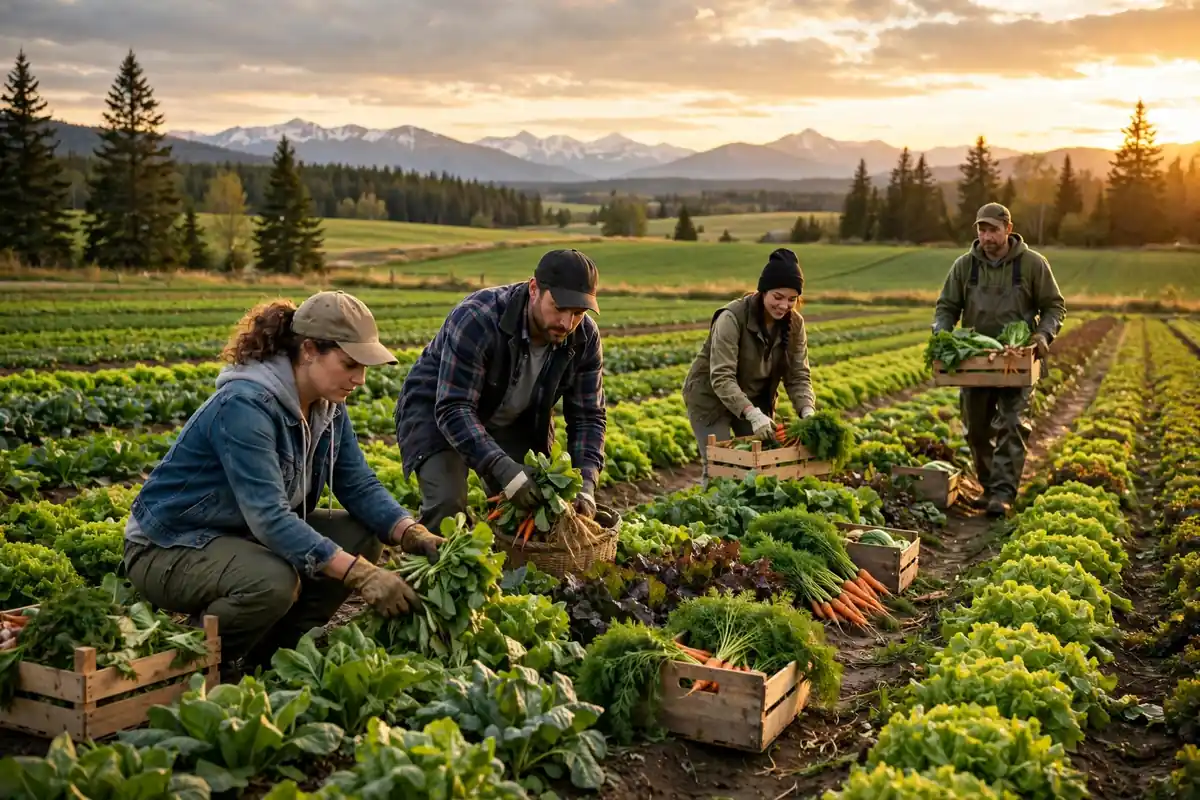
Farm worker duties are physical and seasonal. Your exact tasks depend on the crop and the time of year, but most LMIA based farm jobs include the following:
- Planting seedlings, sowing seeds, and transplanting crops in fields or greenhouses
- Harvesting fruits and vegetables by hand, including picking, sorting, and grading
- Packing produce into boxes, crates, or containers for shipment
- Operating basic farm equipment such as irrigation systems, conveyors, and hand tools
- Cleaning and maintaining work areas, greenhouses, packing sheds, and equipment
- Monitoring crop health and reporting pests, disease, or damage to supervisors
- Loading and unloading trucks, and helping with delivery preparation
- Working outdoors in varying weather conditions, often standing for long shifts
Greenhouse roles, which are common around Leamington, add tasks like pruning, trellising tomato plants, monitoring climate controls, and harvesting inside climate controlled glasshouses. The work is repetitive but structured, and most farms train new workers on site, so prior experience is helpful but rarely mandatory.
Requirements for Foreign Farm Workers
One reason farm jobs are popular with applicants abroad is that the requirements are realistic. Most postings ask for the following:
- No formal education required: Secondary school is sometimes listed but rarely mandatory
- Experience: Usually 1 to 7 months of farm experience is listed as an asset, not a strict requirement; many employers will train you
- Physical fitness: Ability to lift up to 25 kilograms, stand for long periods, and work outdoors in heat, cold, or rain
- Language: Basic English is usually enough; some postings also accept French, and a few list no language requirement
- Legal documents: A valid passport with enough validity to cover your contract, plus the ability to pass any medical or background checks the visa office requires
- Willingness to live in rural areas: Most farms are outside major cities, and employer housing is typically on or near the farm
Under SAWP, workers must come from participating countries, which is the main eligibility filter there. Under the Agricultural Stream, nationality is not restricted in the same way, so workers from countries such as India, Pakistan, the Philippines, Nigeria, and Bangladesh can apply through that stream.
Salary: What Farm Workers Earn in Canada in 2026
Under the Temporary Foreign Worker Program, employers must pay at least the prevailing wage for the occupation and region, and the wage must be listed in the LMIA application. Farm worker pay in Canada therefore tracks closely with provincial minimum wages and the prevailing wage data published by the government.
In Ontario, the general minimum wage rose to $17.95 per hour on October 1, 2026, according to the Ontario government. Most LMIA approved farm worker postings in Ontario advertise between roughly $17 and $22 per hour, depending on the crop, the season, and whether the role involves greenhouse work, equipment operation, or supervisory duties. These figures are approximate and based on typical advertised ranges, so always confirm the exact rate in the written job offer.
Here is a realistic picture of annual earnings for 2026:
- Hourly rate: Approximately $17 to $22 per hour in Ontario
- Weekly hours: Usually 40 to 50 hours during peak season, with overtime possible
- Gross monthly income: Roughly $2,700 to $4,400 per month before deductions, depending on hours worked
- Overtime: Overtime rules follow provincial employment standards, and many farms pay premium rates for extra hours during harvest peaks
Deductions from pay can include income tax, Canada Pension Plan contributions, and Employment Insurance. Housing deductions, if any, are regulated and must be listed in your employment agreement. Your employer must give you a signed employment agreement that states your rate of pay and the maximum hours you will work, so read it carefully before you travel.
Visa and LMIA Route Explained: SAWP vs Agricultural Stream
This is the section most applicants get confused about, so let us compare the two routes clearly. Both are part of the Temporary Foreign Worker Program, both require the employer to obtain an LMIA, and both lead to an employer specific closed work permit. The differences are about who can apply, which countries are eligible, and how long you can stay.
The Seasonal Agricultural Worker Program (SAWP)
SAWP is a government to government program that allows farm employers to hire seasonal workers from Mexico and participating Caribbean countries under bilateral agreements. It covers temporary seasonal needs such as planting, cultivating, and harvesting. Workers can be hired for seasonal periods, traditionally up to eight months of work within the calendar year, and the LMIA processing for SAWP is fast: published ESDC data for August 2026 showed average processing of about 6 business days.
SAWP is strictly limited to workers from the participating countries. If you are from Mexico or one of the Caribbean countries in the agreements, SAWP is often the fastest route. One of its biggest advantages is housing: under SAWP, the employer must provide housing, and in practice SAWP workers typically live rent free on farm accommodation that is inspected by government officials. Note that rules can vary by province, for example in British Columbia some accommodation deductions are permitted, so check your contract.
The Agricultural Stream of the TFWP
The Agricultural Stream is the broader route and is open to workers from any country. Employers use it for primary agriculture production roles, including animal production and greenhouse, nursery, and floriculture production. Hiring can be for non seasonal positions for up to 24 months at a time, which makes it a better fit if you want a longer stay or a role that is not tied to one harvest season.
Published ESDC data for August 2026 showed average Agricultural Stream LMIA processing of about 25 business days, slower than SAWP but still reasonable. Employers under this stream must also ensure suitable housing for workers, and the work must match one of the recognized NOC codes for primary agriculture, such as 85101 for harvesting labourers. For most readers of this site, including applicants from South Asia, Africa, and the Middle East, the Agricultural Stream is the realistic route because SAWP is closed to non participating countries.
Which Route Fits You?
- Choose SAWP if: you are from Mexico or a participating Caribbean country and want seasonal work with the fastest processing
- Choose the Agricultural Stream if: you are from any other country, or you want a contract of up to 24 months rather than a single season
- Both routes require: a positive LMIA from the employer and an employer specific work permit issued before you travel
Neither route allows you to work in Canada on a visitor visa. You must have the work permit approved before you start work, and the permit ties you to the named employer on the document.
Housing Provisions for Farm Workers
Housing is one of the most important benefits of these programs, because most farms are in rural areas where rental housing is scarce. Under SAWP, the employer is required to provide housing, and SAWP workers generally live rent free in on farm accommodation. Under the Agricultural Stream, employers must ensure workers have access to suitable housing, and where rent is charged it is capped at low levels, commonly around $30 per week outside British Columbia. These details can change with program updates, so treat the figures as indicative and confirm them in your employment agreement.
Employer housing for farm workers must meet government inspection standards. Accommodation is inspected before workers arrive, and inspectors check for safe structure, adequate heating, clean water, sanitation, ventilation, fire safety equipment, and freedom from overcrowding and pests. Keep a copy of your employment agreement, and note that any housing deductions must be written into that agreement. If housing conditions are unsafe, you have the right to report the workplace to the local employment or labour standards office, and your employer cannot legally punish you for raising safety concerns.
How to Apply for Farm Worker Jobs in Canada from Abroad
Follow these steps in order. Skipping steps or taking shortcuts is how people fall into scams.
- Find genuine job postings. Search the Government of Canada Job Bank and filter for employers approved to hire temporary foreign workers with a positive LMIA. Reputable employers and recruitment agencies specializing in agriculture also post LMIA approved roles. Look for postings that name the employer, list a wage, and describe duties.
- Apply directly to the employer. Send your resume and a short cover message by the method the posting specifies. Legitimate employers never charge you a fee to apply or to receive a job offer.
- Receive a written job offer and signed employment agreement. The offer must state your job title, duties, wage, hours, location, and contract dates. Both you and the employer sign the agreement, and you keep a copy.
- The employer applies for the LMIA. This is the employer’s job and the employer’s cost. Under SAWP or the Agricultural Stream, ESDC assesses whether a Canadian worker is available and whether the offer meets program standards. You wait for a positive LMIA before doing anything else.
- Apply for your work permit. Once the LMIA is approved, you apply for an employer specific work permit at the Canadian visa office serving your country. You will need your passport, the LMIA number, the job offer, and possibly medical exams and police certificates.
- Complete biometrics and medicals if requested. Attend the appointments the visa office schedules. Do not book flights until the permit is issued.
- Travel and report to the farm. Your employer arranges or confirms your arrival details. Bring your passport, work permit, employment agreement, and contact details for the farm. Keep emergency contacts and the worker rights information given to you.
The whole process from application to arrival commonly takes several months, mainly because of LMIA and work permit processing times, so apply well before the planting or harvest season you are targeting.
While you wait, you can explore other sponsored job options on this site. For example, if you have kitchen experience, see our guide on cook jobs in Canada with LMIA 2026, or if you prefer warehouse work, check warehouse worker jobs in Canada with LMIA 2026.
Scam Warning: Protect Yourself from LMIA and Job Offer Fraud
Farm job scams targeting foreign applicants are common, and they follow predictable patterns. Protect yourself with these rules:
- Never pay for a job offer or an LMIA. The LMIA is the employer’s application and the employer’s cost. Any agent asking you to pay thousands of dollars for an LMIA or a guaranteed job offer is running a scam.
- Verify the employer exists. Check the company name, address, and phone number independently. Search the Job Bank to see if the employer is listed as approved to hire temporary foreign workers.
- Do not pay large upfront agency fees. Legitimate recruitment for TFWP farm jobs does not require you to wire large sums to individuals on messaging apps. Small, receipted service fees from registered consultants are one thing; demands for cash with no paperwork are a red flag.
- Watch for fake documents. Scammers forge LMIA approval letters and work permits. A real process ends with a work permit issued through the official visa application system, not a PDF emailed by an agent.
- Never travel on a visitor visa to start work. Anyone telling you to come to Canada as a visitor and promising to convert it into a farm work permit is misleading you. Work must be authorized by a work permit before you begin.
If someone has already taken your money, report it to the police in your country and to Canadian authorities. You can also read our other guides on sponsored roles, such as caregiver jobs in Canada with LMIA 2026, to understand what a legitimate sponsored hiring process looks like across occupations.
Frequently Asked Questions
Can I apply for farm worker jobs in Canada from outside Canada?
Yes. Most LMIA based farm jobs are designed for applicants abroad. You apply to the employer, the employer obtains a positive LMIA, and then you apply for an employer specific work permit at the Canadian visa office serving your country. You must have the work permit approved before travelling.
Do I need experience to get a farm worker job with LMIA?
Usually not as a strict requirement. Most postings list a few months of farm experience as an asset, and many employers train new workers on site. Physical fitness and willingness to do manual outdoor work matter more than qualifications.
Which is better, SAWP or the Agricultural Stream?
It depends on your nationality. SAWP is limited to Mexico and participating Caribbean countries and offers the fastest processing, typically about a week for the LMIA, plus rent free employer housing. The Agricultural Stream is open to workers from any country and allows contracts of up to 24 months, with LMIA processing averaging about 25 business days in recent published data. If you are from a country outside the SAWP agreements, the Agricultural Stream is your route.
How much do farm workers earn in Canada in 2026?
Employers must pay at least the prevailing wage listed in the LMIA. In Ontario, the minimum wage is $17.95 per hour from October 1, 2026, and typical advertised farm worker rates fall between about $17 and $22 per hour, depending on the crop and duties. With 40 to 50 hour weeks during peak season, monthly gross earnings commonly range from about $2,700 to $4,400. Treat these as indicative ranges and confirm the exact rate in your written offer.
Is housing really provided by the employer?
Under SAWP, yes, the employer must provide housing, and SAWP workers generally live rent free in inspected on farm accommodation. Under the Agricultural Stream, employers must ensure access to suitable housing, with rent capped at low levels where charged. Housing standards are inspected by government officials before workers arrive.
Can a farm worker job lead to permanent residence in Canada?
A farm work permit by itself does not grant permanent residence, but legal Canadian work experience can support future immigration applications under programs such as the Agri Food Pilot or provincial nominee streams where they apply. Research the current eligibility rules carefully, since pilot programs open and close, and never trust an agent who guarantees permanent residence as part of a job offer.
Can I apply for farm worker jobs in Canada from outside Canada?
Yes. Most LMIA based farm jobs are designed for applicants abroad. You apply to the employer, the employer obtains a positive LMIA, and then you apply for an employer specific work permit at the Canadian visa office serving your country. You must have the work permit approved before travelling.
Do I need experience to get a farm worker job with LMIA?
Usually not as a strict requirement. Most postings list a few months of farm experience as an asset, and many employers train new workers on site. Physical fitness and willingness to do manual outdoor work matter more than qualifications.
Which is better, SAWP or the Agricultural Stream?
It depends on your nationality. SAWP is limited to Mexico and participating Caribbean countries and offers the fastest processing, typically about a week for the LMIA, plus rent free employer housing. The Agricultural Stream is open to workers from any country and allows contracts of up to 24 months, with LMIA processing averaging about 25 business days in recent published data. If you are from a country outside the SAWP agreements, the Agricultural Stream is your route.
How much do farm workers earn in Canada in 2026?
Employers must pay at least the prevailing wage listed in the LMIA. In Ontario, the minimum wage is $17.95 per hour from October 1, 2026, and typical advertised farm worker rates fall between about $17 and $22 per hour, depending on the crop and duties. With 40 to 50 hour weeks during peak season, monthly gross earnings commonly range from about $2,700 to $4,400. Treat these as indicative ranges and confirm the exact rate in your written offer.
Is housing really provided by the employer?
Under SAWP, yes, the employer must provide housing, and SAWP workers generally live rent free in inspected on farm accommodation. Under the Agricultural Stream, employers must ensure access to suitable housing, with rent capped at low levels where charged. Housing standards are inspected by government officials before workers arrive.
Can a farm worker job lead to permanent residence in Canada?
A farm work permit by itself does not grant permanent residence, but legal Canadian work experience can support future immigration applications under programs such as the Agri Food Pilot or provincial nominee streams where they apply. Research the current eligibility rules carefully, since pilot programs open and close, and never trust an agent who guarantees permanent residence as part of a job offer.